Luca Maria Gambardella (born 4 January 1962) is an Italian computer scientist and author. He is the former director of the Dalle Molle Institute for Artificial Intelligence Research in Lugano, in the Ticino canton of Switzerland. He is currently the prorector of Università della Svizzera italiana, where he directs the Master of Science in Artificial Intelligence degree course. Several of his papers have been extensively cited, with his collaborators including Marco Dorigo, with whom he has published papers on the application of ant colony optimization theory to the traveling salesman problem, and Jürgen Schmidhuber with whom he has published research on deep neural networks.. Beside working in research, Gambardella explores the potentials of AI applied for the generation of art. Some of his artistic installations received significant media coverage. As a novelist, the genres he approached broad from Bildungsroman of his first book "Sei vite" ("Six lives"), to romance of his second book "Il suono dell'alba" ("The sound of sunrise").
Apps to analyse COVID-19 sounds
Apps to analyse COVID-19 sounds are mobile software applications designed to collect respiratory sounds and aid diagnosis in response to the COVID-19 pandemic. Numerous applications are in development, with different institutions and companies taking various approaches to privacy and data collection. Current efforts are aimed at gathering data. In a later stage, it is possible that sound apps will have the capacity (and ethical approvals) to provide information back to users. In order to develop and train signal analysis approaches, large datasets are required. == History == The COVID-19 outbreak was announced as a global pandemic by the World Health Organization in March 2020 and has affected a growing number of people globally. In this context, advanced artificial intelligence techniques are being considered as tools in aiding our response to global health crisis. Other COVID-19 apps which offer solutions for user tracking have been developed. At the same time a number of approaches which tries to use respiratory sounds and artificial intelligence to understand if the disease can be diagnosed have been proposed. A few studies are available as preprints (i.e. not yet peer-reviewed) documents. == Methodologies == The potential for using speech and sound analysis by artificial intelligence to help in this scenario, by surveying which types of related or contextually significant phenomena can be automatically assessed from speech or sound has been recently overviewed. These include the automatic recognition and monitoring of breathing, dry and wet coughing or sneezing sounds, speech under cold, eating behaviour, sleepiness, or pain. Additionally, the potential use-cases of intelligent speech analysis for COVID-19 diagnosed patients has also been presented. In particular, by analysing speech recordings from these patients, an audio-only-based model to automatically categorise the health state of patients from four aspects, including the severity of illness, sleep quality, fatigue, and anxiety, is constructed. This work shows promise in estimating the severity of illness. Machine learning methods have been explored to recognize and diagnose coughs from different diseases. These included a low complexity, automated recognition and diagnostic tool for screening respiratory infections that utilizes convolutional neural networks (CNNs) to detect cough within environment audio and diagnose three potential illnesses (i.e. bronchitis, bronchiolitis and pertussis) based on their unique cough audio features. A large-scale crowdsourced dataset of respiratory sounds has been collected to aid diagnosis of COVID-19: coughs and breathing sounds are sufficient to distinguish users affected by COVID-19 versus those affected by asthma or healthy controls. Behind these studies is the ambition that automated systems to screen for respiratory diseases based on voice, raw cough or other sound data would have positive medical applications in both clinical and public health arenas. == List of apps to analyse COVID-19 sounds ==
Conditional random field
Conditional random fields (CRFs) are a class of statistical modeling methods often applied in pattern recognition and machine learning and used for structured prediction. Whereas a classifier predicts a label for a single sample without considering "neighbouring" samples, a CRF can take context into account. To do so, the predictions are modelled as a graphical model, which represents the presence of dependencies between the predictions. The kind of graph used depends on the application. For example, in natural language processing, "linear chain" CRFs are popular, for which each prediction is dependent only on its immediate neighbours. In image processing, the graph typically connects locations to nearby and/or similar locations to enforce that they receive similar predictions. Other examples where CRFs are used are: labeling or parsing of sequential data for natural language processing or biological sequences, part-of-speech tagging, shallow parsing, named entity recognition, gene finding, peptide critical functional region finding, and object recognition and image segmentation in computer vision. == Description == CRFs are a type of discriminative undirected probabilistic graphical model. Lafferty, McCallum and Pereira define a CRF on observations X {\displaystyle {\boldsymbol {X}}} and random variables Y {\displaystyle {\boldsymbol {Y}}} as follows: Let G = ( V , E ) {\displaystyle G=(V,E)} be a graph such that Y = ( Y v ) v ∈ V {\displaystyle {\boldsymbol {Y}}=({\boldsymbol {Y}}_{v})_{v\in V}} , so that Y {\displaystyle {\boldsymbol {Y}}} is indexed by the vertices of G {\displaystyle G} . Then ( X , Y ) {\displaystyle ({\boldsymbol {X}},{\boldsymbol {Y}})} is a conditional random field when each random variable Y v {\displaystyle {\boldsymbol {Y}}_{v}} , conditioned on X {\displaystyle {\boldsymbol {X}}} , obeys the Markov property with respect to the graph; that is, its probability is dependent only on its neighbours in G and not its past states: P ( Y v | X , { Y w : w ≠ v } ) = P ( Y v | X , { Y w : w ∼ v } ) {\displaystyle P({\boldsymbol {Y}}_{v}|{\boldsymbol {X}},\{{\boldsymbol {Y}}_{w}:w\neq v\})=P({\boldsymbol {Y}}_{v}|{\boldsymbol {X}},\{{\boldsymbol {Y}}_{w}:w\sim v\})} , where w ∼ v {\displaystyle {\mathit {w}}\sim v} means that w {\displaystyle w} and v {\displaystyle v} are neighbors in G {\displaystyle G} . What this means is that a CRF is an undirected graphical model whose nodes can be divided into exactly two disjoint sets X {\displaystyle {\boldsymbol {X}}} and Y {\displaystyle {\boldsymbol {Y}}} , the observed and output variables, respectively; the conditional distribution p ( Y | X ) {\displaystyle p({\boldsymbol {Y}}|{\boldsymbol {X}})} is then modeled. === Inference === For general graphs, the problem of exact inference in CRFs is intractable. The inference problem for a CRF is basically the same as for an MRF and the same arguments hold. However, there exist special cases for which exact inference is feasible: If the graph is a chain or a tree, message passing algorithms yield exact solutions. The algorithms used in these cases are analogous to the forward-backward and Viterbi algorithm for the case of HMMs. If the CRF only contains pair-wise potentials and the energy is submodular, combinatorial min cut/max flow algorithms yield exact solutions. If exact inference is impossible, several algorithms can be used to obtain approximate solutions. These include: Loopy belief propagation Alpha expansion Mean field inference Linear programming relaxations === Parameter learning === Learning the parameters θ {\displaystyle \theta } is usually done by maximum likelihood learning for p ( Y i | X i ; θ ) {\displaystyle p(Y_{i}|X_{i};\theta )} . If all nodes have exponential family distributions and all nodes are observed during training, this optimization is convex. It can be solved for example using gradient descent algorithms, or Quasi-Newton methods such as the L-BFGS algorithm. On the other hand, if some variables are unobserved, the inference problem has to be solved for these variables. Exact inference is intractable in general graphs, so approximations have to be used. === Examples === In sequence modeling, the graph of interest is usually a chain graph. An input sequence of observed variables X {\displaystyle X} represents a sequence of observations and Y {\displaystyle Y} represents a hidden (or unknown) state variable that needs to be inferred given the observations. The Y i {\displaystyle Y_{i}} are structured to form a chain, with an edge between each Y i − 1 {\displaystyle Y_{i-1}} and Y i {\displaystyle Y_{i}} . As well as having a simple interpretation of the Y i {\displaystyle Y_{i}} as "labels" for each element in the input sequence, this layout admits efficient algorithms for: model training, learning the conditional distributions between the Y i {\displaystyle Y_{i}} and feature functions from some corpus of training data. decoding, determining the probability of a given label sequence Y {\displaystyle Y} given X {\displaystyle X} . inference, determining the most likely label sequence Y {\displaystyle Y} given X {\displaystyle X} . The conditional dependency of each Y i {\displaystyle Y_{i}} on X {\displaystyle X} is defined through a fixed set of feature functions of the form f ( i , Y i − 1 , Y i , X ) {\displaystyle f(i,Y_{i-1},Y_{i},X)} , which can be thought of as measurements on the input sequence that partially determine the likelihood of each possible value for Y i {\displaystyle Y_{i}} . The model assigns each feature a numerical weight and combines them to determine the probability of a certain value for Y i {\displaystyle Y_{i}} . Linear-chain CRFs have many of the same applications as conceptually simpler hidden Markov models (HMMs), but relax certain assumptions about the input and output sequence distributions. An HMM can loosely be understood as a CRF with very specific feature functions that use constant probabilities to model state transitions and emissions. Conversely, a CRF can loosely be understood as a generalization of an HMM that makes the constant transition probabilities into arbitrary functions that vary across the positions in the sequence of hidden states, depending on the input sequence. Notably, in contrast to HMMs, CRFs can contain any number of feature functions, the feature functions can inspect the entire input sequence X {\displaystyle X} at any point during inference, and the range of the feature functions need not have a probabilistic interpretation. == Variants == === Higher-order CRFs and semi-Markov CRFs === CRFs can be extended into higher order models by making each Y i {\displaystyle Y_{i}} dependent on a fixed number k {\displaystyle k} of previous variables Y i − k , . . . , Y i − 1 {\displaystyle Y_{i-k},...,Y_{i-1}} . In conventional formulations of higher order CRFs, training and inference are only practical for small values of k {\displaystyle k} (such as k ≤ 5), since their computational cost increases exponentially with k {\displaystyle k} . However, another recent advance has managed to ameliorate these issues by leveraging concepts and tools from the field of Bayesian nonparametrics. Specifically, the CRF-infinity approach constitutes a CRF-type model that is capable of learning infinitely-long temporal dynamics in a scalable fashion. This is effected by introducing a novel potential function for CRFs that is based on the Sequence Memoizer (SM), a nonparametric Bayesian model for learning infinitely-long dynamics in sequential observations. To render such a model computationally tractable, CRF-infinity employs a mean-field approximation of the postulated novel potential functions (which are driven by an SM). This allows for devising efficient approximate training and inference algorithms for the model, without undermining its capability to capture and model temporal dependencies of arbitrary length. There exists another generalization of CRFs, the semi-Markov conditional random field (semi-CRF), which models variable-length segmentations of the label sequence Y {\displaystyle Y} . This provides much of the power of higher-order CRFs to model long-range dependencies of the Y i {\displaystyle Y_{i}} , at a reasonable computational cost. Finally, large-margin models for structured prediction, such as the structured Support Vector Machine can be seen as an alternative training procedure to CRFs. === Latent-dynamic conditional random field === Latent-dynamic conditional random fields (LDCRF) or discriminative probabilistic latent variable models (DPLVM) are a type of CRFs for sequence tagging tasks. They are latent variable models that are trained discriminatively. In an LDCRF, like in any sequence tagging task, given a sequence of observations x = x 1 , … , x n {\displaystyle x_{1},\dots ,x_{n}} , the main problem the model must solve is how to assign a sequence of labels y = y 1 , … , y n {\displaystyle y_{1},\dots ,y_{n}} from one finite set
Socially assistive robot
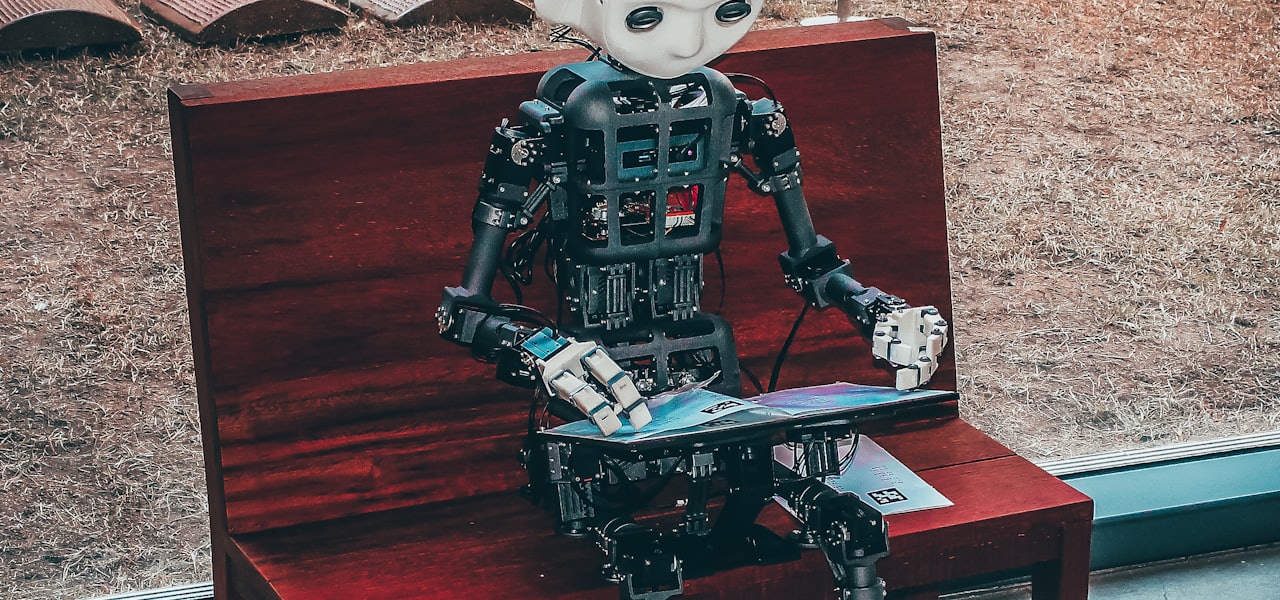
A socially assistive robot (SAR) aids users through social engagement and support rather than through physical tasks and interactions. == Background == The field of socially assistive robotics emerged in the early 2000s, following the emergence of the field of social robots. In contrast to social robots, SARs aid users with specific goals related to behavior change rather than serving as purely social entities. The term "Socially assistive robot" was initially defined by Maja Matarić and David Feil-Seifer in 2005. Since its inception, the field has gained substantial recognition, featuring numerous research projects, a wealth of global research publications, startup companies, and a growing array of products on the consumer market. The COVID-19 pandemic has underscored the immense potential of socially assistive robots, particularly in addressing the needs of large user populations, including children engaged in remote learning, elderly individuals grappling with loneliness, and those affected by social isolation and its associated negative consequences. == Characteristics of interaction == SARs rely on artificial intelligence (AI) to generate real-time, responsive, natural, and meaningful robot behaviors during interactions with humans. The robots employ various forms of communication, such as facial expressions, gestures, body movements, and speech. In contrast to robots intended for physical tasks, SARs are designed to support and motivate users to perform their own tasks. The tasks a user engages in can be physical (e.g., rehabilitation exercises for post-stroke users), cognitive (e.g., dementia screening for elderly users), or social (e.g., turn-taking for users with autism spectrum disorders). This complex interaction involves detecting and interpreting the user's movement, behavior, intent, goals, speech, and preferences. Machine learning and robot learning techniques are frequently employed to enhance the robot's understanding of the user, predict user preferences, and provide effective assistance. The effectiveness of socially assistive robots is assessed based on objective measurements of user performance and improvement resulting from the robot’s assistance and support. Unlike other branches of robotics, where effectiveness depends on the robot's physical task completion, SAR measures the success of the robot based on the user's progress and achievements. This evaluation is carried out using quantitative objective metrics, such as time spent on tasks, accuracy, retention, and verbalization, as well as quantitative subjective metrics, such as user survey tools. SAR is based on the large body of evidence showing that users tend to respond more positively to interactions with physical robots compared to interactions with screens. Interaction with physical robots also encourages users to learn and retain more information than screen-based interactions. This fundamental insight underlines why physical robots in SAR applications are more effective, as opposed to interactions solely involving screens, tablets, or computers. == Uses and applications == SARs have been developed and validated in a wide array of applications, including healthcare, elder care, education, and training. For example, SARs have been developed to support children on the autism spectrum in acquiring and practicing social and cognitive skills, to motivate and coach stroke patients throughout their rehabilitation exercises, monitoring individuals health (ex. fall detection), and to encourage elderly users to be more physically and socially active. There is a concern that technophobia and lack of trust in robots will pose a barrier to the effectiveness of SARs in older adults.
Software agent
In computer science, a software agent is a computer program that acts for a user or another program in a relationship of agency. The term agent is derived from the Latin agere (to do): an agreement to act on one's behalf. Such "action on behalf of" implies the authority to decide which, if any, action is appropriate. Some agents are colloquially known as bots, from robot. They may be embodied, as when execution is paired with a robot body, or as software such as a chatbot executing on a computer, such as a mobile device, e.g. Siri. Software agents may be autonomous or work together with other agents or people. Software agents interacting with people (e.g. chatbots, human-robot interaction environments) may possess human-like qualities such as natural language understanding and speech, personality or embody humanoid form (see Asimo). Related and derived concepts include intelligent agents (in particular exhibiting some aspects of artificial intelligence, such as reasoning), autonomous agents (capable of modifying the methods of achieving their objectives), distributed agents (being executed on physically distinct computers), multi-agent systems (distributed agents that work together to achieve an objective that could not be accomplished by a single agent acting alone), and mobile agents (agents that can relocate their execution onto different processors). == Concepts == The basic attributes of an autonomous software agent are that agents: are not strictly invoked for a task, but activate themselves, may reside in wait status on a host, perceiving context, may get to run status on a host upon starting conditions, do not require interaction of user, may invoke other tasks including communication. The concept of an agent provides a method of describing a complex software entity that is capable of acting with a certain degree of autonomy in order to accomplish tasks on behalf of its host. But unlike objects, which are defined in terms of methods and attributes, an agent is defined in terms of its behavior. Various authors have proposed different definitions of agents, these commonly include concepts such as: persistence: code is not executed on demand but runs continuously and decides for itself when it should perform some activity; autonomy: agents have capabilities of task selection, prioritization, goal-directed behavior, decision-making without human intervention; social ability: agents are able to engage other components through some sort of communication and coordination, they may collaborate on a task; reactivity: agents perceive the context in which they operate and react to it appropriately. === Distinguishing agents from programs === All agents are programs, but not all programs are agents. Contrasting the term with related concepts may help clarify its meaning. Franklin & Graesser (1997) discuss four key notions that distinguish agents from arbitrary programs: reaction to the environment, autonomy, goal-orientation and persistence. === Intuitive distinguishing agents from objects === Agents are more autonomous than objects. Agents have flexible behavior: reactive, proactive, social. Agents have at least one thread of control but may have more. === Distinguishing agents from expert systems === Expert systems are not coupled to their environment. Expert systems are not designed for reactive, proactive behavior. Expert systems do not consider social ability. === Distinguishing intelligent software agents from intelligent agents in AI === Intelligent agents (also known as rational agents) are not just computer programs: they may also be machines, human beings, communities of human beings (such as firms) or anything that is capable of goal-directed behavior. == Impact of software agents == Software agents may offer various benefits to their end users by automating complex or repetitive tasks. However, there are organizational and cultural impacts of this technology that need to be considered prior to implementing software agents. === Organizational impact === === Work contentment and job satisfaction impact === People like to perform easy tasks providing the sensation of success unless the repetition of the simple tasking is affecting the overall output. In general implementing software agents to perform administrative requirements provides a substantial increase in work contentment, as administering their own work does never please the worker. The effort freed up serves for a higher degree of engagement in the substantial tasks of individual work. Hence, software agents may provide the basics to implement self-controlled work, relieved from hierarchical controls and interference. Such conditions may be secured by application of software agents for required formal support. === Cultural impact === The cultural effects of the implementation of software agents include trust affliction, skills erosion, privacy attrition and social detachment. Some users may not feel entirely comfortable fully delegating important tasks to software applications. Those who start relying solely on intelligent agents may lose important skills, for example, relating to information literacy. In order to act on a user's behalf, a software agent needs to have a complete understanding of a user's profile, including his/her personal preferences. This, in turn, may lead to unpredictable privacy issues. When users start relying on their software agents more, especially for communication activities, they may lose contact with other human users and look at the world with the eyes of their agents. These consequences are what agent researchers and users must consider when dealing with intelligent agent technologies. === History === The concept of an agent can be traced back to Hewitt's Actor Model (Hewitt, 1977) - "A self-contained, interactive and concurrently-executing object, possessing internal state and communication capability." To be more academic, software agent systems are a direct evolution of Multi-Agent Systems (MAS). MAS evolved from Distributed Artificial Intelligence (DAI), Distributed Problem Solving (DPS) and Parallel AI (PAI), thus inheriting all characteristics (good and bad) from DAI and AI. John Sculley's 1987 "Knowledge Navigator" video portrayed an image of a relationship between end-users and agents. Being an ideal first, this field experienced a series of unsuccessful top-down implementations, instead of a piece-by-piece, bottom-up approach. The range of agent types is now (from 1990) broad: WWW, search engines, etc. == Examples of intelligent software agents == === Buyer agents (shopping bots) === Buyer agents travel around a network (e.g. the internet) retrieving information about goods and services. These agents, also known as 'shopping bots', work very efficiently for commodity products such as CDs, books, electronic components, and other one-size-fits-all products. Buyer agents are typically optimized to allow for digital payment services used in e-commerce and traditional businesses. === User agents (personal agents) === User agents, or personal agents, are intelligent agents that take action on your behalf. In this category belong those intelligent agents that already perform, or will shortly perform, the following tasks: Check your e-mail, sort it according to the user's order of preference, and alert you when important emails arrive. Play computer games as your opponent or patrol game areas for you. Assemble customized news reports for you. There are several versions of these, including CNN. Find information for you on the subject of your choice. Fill out forms on the Web automatically for you, storing your information for future reference Scan Web pages looking for and highlighting text that constitutes the "important" part of the information there Discuss topics with you ranging from your deepest fears to sports Facilitate with online job search duties by scanning known job boards and sending the resume to opportunities who meet the desired criteria Profile synchronization across heterogeneous social networks === Monitoring-and-surveillance (predictive) agents === Monitoring and surveillance agents are used to observe and report on equipment, usually computer systems. The agents may keep track of company inventory levels, observe competitors' prices and relay them back to the company, watch stock manipulation by insider trading and rumors, etc. For example, NASA's Jet Propulsion Laboratory has an agent that monitors inventory, planning, schedules equipment orders to keep costs down, and manages food storage facilities. These agents usually monitor complex computer networks that can keep track of the configuration of each computer connected to the network. A special case of monitoring-and-surveillance agents are organizations of agents used to automate decision-making process during tactical operations. The agents monitor the status of assets (ammunition, weapons available, platforms for transport, etc.) and receive goals from hi
Clue (mobile app)
Clue is a menstrual health app developed by the Berlin-based technology company BioWink GmbH. The app has over 15 million users from 180 countries. The startup has raised over $17 million from backers that include Union Square Ventures and Mosaic Ventures. == History == Clue was co-founded by Ida Tin, Hans Raffauf, Mike LaVigne and Moritz von Buttlar in 2012. BioWink GmbH launched the app in 2013. Ida Tin's stated goal was to take female reproductive health “out of taboo land” and to start “a reproductive health revolution.” Tin previously led motorbike tours around the world and wrote a book about her experience. By July 2017, the Clue app had more than 8 million active users on both Android and iOS. Users were representative of more than 180 countries. In 2015, BioWink GmbH closed a $7 million Series A funding round led by Union Square Ventures and Mosaic Ventures, bringing the company's total funding to $10 million. The company was listed as one of Europe's Hottest Startups in 2015 by Wired UK, with Clue being named one of the best apps in 2015 by both Apple and Google. In March 2018, the company launched an editorial site to serve as a resource for accessible and scientific menstrual health information. == Mobile app == The Clue mobile application calculates and predicts a user's period, fertile window, and premenstrual syndrome. It also informs users the most or least likely time for becoming pregnant and allows them to track more than 30 health categories, including sex, sleep, pain, exercise, hair, skin, digestion, emotions and energy. The app can also explain how pill dosages impact fertility and includes an alarm system to allow for reminders for taking pills. In 2015, the company closed a Series A funding round and announced plans to use the proceeds to expand features of the mobile app and hire more staff. Clue also partnered with universities such as Stanford University, Columbia University, University of Washington, and University of Oxford to advance female health research. Clue integrated with Apple Inc.'s HealthKit for iOS 9 in September 2015, allowing data such as body temperature, cervical mucus quality, menstruation, ovulation test results, sexual activity, and spotting directly to the app. In 2016, Clue was available in 15 languages on both iOS and Android. That same year, Clue introduced a cycle-sharing feature and in 2017 a pill-tracking option. In February 2018, Clue made its app available on the Fitbit Ionic smartwatch. In 2026, Clue partnered with UK-based digital healthcare platform Evaro, an NHS-licensed provider, to offer embedded prescription services within the app.
Agent verification
Agent verification is activity to gain assurances that purposeful artificial constructs act in accordance with their specifications. While primitive forms of inorganic agents have been used in manufacturing for centuries, the study of artificial agents did not begin until the mid 20th century. Foundational work on such agents was closely bound with the emergence of artificial intelligence as an academic discipline. Early agents deployed for industrial control systems and in computing were often controlled by quite simple logic however, not involving artificial intelligence as such. When deployed as part of a multi-agent system, even such simple agents could require special agent orientated testing methods, as their collective behaviour was challenging to verify with traditional testing techniques. Difficulties in providing assurances that agents will not behave in dangerous ways became more prevalent after the introduction of LLM agents, especially after the rapid acceleration of their deployment in 2025. The verification of agent behaviour can be conducted by formal or informal methods. Informal verification requires less mathematical skill. But when agents are part of systems where errors have significant risks — such as danger to human life, environmental damage or major financial loss — formal verification is preferred. Both regulators and system designers themselves like formal verification as it provides a high degree of mathematical certainty. It is not however always possible to formally test all aspects of an agent based system's behaviour, especially where newer LLM based agents are concerned, due in part to their high degree of autonomy. Accordingly, agent verification for low impact deployments might be carried out only with informal methods, while for high impact deployments, it may be performed with a mix of formal and informal techniques. == Terminology == In academia, the term agent verification is often defined to mean activity concerned with gaining assurance that the agent behaves in accordance with its specification - whether by processes such as testing or simulation. 'Verification' is typically contrasted with 'validation', the latter meaning activity concerned with checking that the specification itself meets user or real world needs. Such definitions are not universally adhered to however - for example, in some workplaces and documents, the words 'verification' and 'validation' can be used synonymously. Efforts to gain confidence in Agents have intensified sharply since 2025 due to the rapid roll out of LLM agents; different terms are sometimes used in the commercial sector. Here the term 'agent verification' can be used in the same sense as it is in academia, but sometimes the same activity can be covered by more ambiguous and wider ranging terms such as 'Agent governance' , 'Agent observability' or 'AI agent policing'. == History == === Classical agents === The theoretical underpinnings for artificial (inorganic) agents emerged in the mid 20th century, with establishment of cybernetics and artificial intelligence. Oliver Selfridge's 1958 Pandemonium - A Paradigm for Learning paper was an important early theoretical contribution in establishing agent oriented architecture. Practical implementations of agents for real world applications began to become widespread in the 1990s, after the introduction of the belief–desire–intention software model (BDI), and agent-oriented programming. Pure digital agents were deployed in computer infrastructure for purposes such as monitoring, while agents connected to real-world sensors and actuators were increasingly used in industrial control systems. While the concept of artificial agents was interwoven with early artificial intelligence studies right from the start, early agents lacked general purpose reasoning capabilities, often only having simple if then logic. Even a device as simple as a thermostat, which has a sensor and a means of acting, can be considered a proto agent in this sense. Verifying the behaviours of a simple single agent system is not generally especially difficult, but it can be a different matter when several simple agents coexist in the same system. Craig Reynolds's work on boids showed that relatively complex, "intelligent" behaviour can emerge from a number of such simple agents working together in a Multi-agent system (MAS). By the 1990s, even the behaviour of a single agent system could sometimes be quite complex; in accordance with the Belief–desire–intention software model, agents could have believes that might evolve over time. Agents were increasingly introduced that were controlled by quite large decision tree models, which had new vulnerabilities to adversarial attack. It was becoming increasingly apparent that traditional software verification methods had limitations for testing such agents, or even for the more primitive type of agents when they were deployed as part of a MAS. It was the use of agents for industrial control systems, sometimes associated with robotics, that lent urgency to the practice of agent verification. Informal testing might be acceptable for digital agents used say to monitor whether each of an organisation's computers are properly licensed. But with an increasing potential for faulty agents to result in a failure that might cause a large fire to break out at a chemical manufacturing plant, a botched medical operation, or even a crashed aircraft, the need to develop reliable means of verifying behaviour of such agents was considered urgent. The Foundation for Intelligent Physical Agents was established in 1996. From the late 90s, a growing number of industry and university based scientists began working on the problem, with researchers publishing papers on the verification of both single and multi agent systems. Much of this work showed how formal verification techniques like model checking could be used to gain a high level of assurance that agent based systems would conform with their specification. A 2018 systematic review covering 231 studies found that model checking was the most common technique for agent verification, with theorem proving the second most commonly used formal verification method. In the first two decades of the 20th century, agents run by AI became more common, with Siri and Alexa being well known examples. But such agents still lacked general reasoning capabilities and did not pose new pressing problems for agent verification. === General purpose reasoning agents === The advent of LLMs created huge potential for further use of artificial agents, as agents based on them could have general purpose cognitive abilities. Agents run by LLMs (and occasionally non-LLM foundation models) have similar vulnerability to adversarial attack as those run by decision tree models. The wider scope of actions for LLM agents has created new challenges for their verification, over and above those present for classical agents. For example, the LLM's neural network endows it with infinite domains, an especial challenge for traditional formal verification techniques. Academics began to study the problems involved in verifying LLM agents from 2018. Deployment of such agents began to accelerate in late 2023 after OpenAI's "function-calling" API was made available, and especially after Anthropic's late 2024 introduction of Model Context Protocol (MCP), a standardised way for LLM agents to gain contextual awareness, and to act on the world by calling various external tools. The rapid rollout of LLM agents following MCP's release has seen the task of agent verification receive increased attention within academia, and also from the private sector. In 2024 and 2025 several startups focusing on LLM agent verification have been founded in both Europe and the US to meet growing demand. == Approaches == === Formal verification === Formal verification involves proving the correctness of some or all aspects of a system using mathematical methods. Such methods can range from manual formal proof, to verification assisted with automated theorem provers like Isabelle. For agent verification, model checking is by far the most frequently used formal verification method; for pre-LLM models it was often complemented with techniques using computation tree logic. Another common method is theorem proving. Formal verification provides a higher degree of confidence than informal methods, but it is not always used, even when it is possible. Sometimes a person or organisation developing software agents won't have the necessary skills, or may not see it as worth the effort if the agent(s) will not have the ability to cause much harm even if they malfunction. When agents are deployed in systems where errors could have serious consequences, the ability of formal verification methods to provide mathematical certainty tends to be strongly preferred by both regulators and designers themselves. But even for high impact systems, formal verificatio